
Six DC Sites, Two Sales Reps and 100+ Zaps
Scott Brodbeck started ARLnow in 2010 and now runs or partners on six DC-area sites. He explains how he makes money, how he sells ads, and what he automated.
 TJ LarkinHost, Local Media HQ PodcastApril 11, 2025 · 9 min read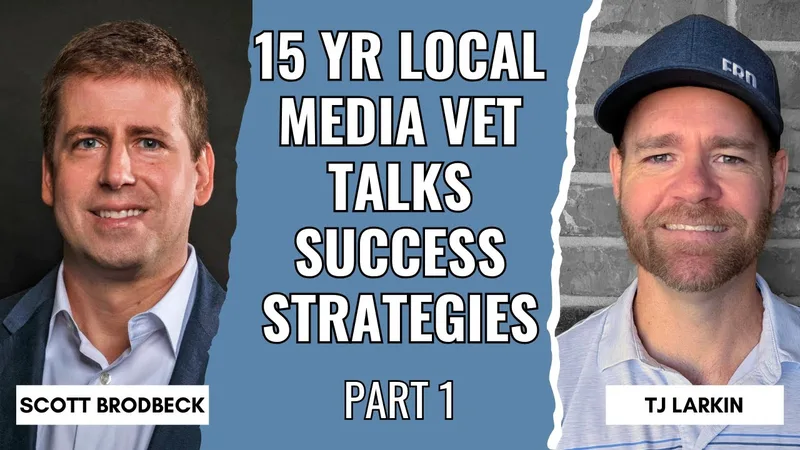
- Website first, newsletter second. Scott's sites publish the articles, and an automated newsletter of headlines, photos and links pushes them out. Hand-writing it never produced more opens or clicks.
- Six sites, two ways to run them. He owns three (operating two himself, one run by a franchisee) and partners on three more, hosting them and selling their ads.
- Advertising comes in four flavors. Programmatic ads, direct sales (more than half of revenue), a self-serve content hub, and memberships. He admits he's overlevered on ads.
- Automate anything that repeats. Airtable, Zapier and Mailchimp send the daily newsletter, approve events and email advertiser stats, with over a hundred Zaps running.
Scott Brodbeck calls himself an OG of local online news, and he has the years to back it up: he started in 2010. Today his company runs or partners on six sites in the DC area, with 6 to 8 million page views a month across them. In this first of two parts, he explains why he stayed website-first while everyone else is going newsletter-first, how his ad revenue breaks down, and why he's so aggressive about automation. Part 2 picks up the operations and where he thinks local media is headed.
How a night-shift TV job turned into ARLnow
Scott worked in local TV news in the DC area after college. He loved local news as a kid, when he had a police scanner and biked out to photograph crashes and fires. After the financial crisis he decided TV wasn't going in the right direction and that he needed to make his own luck, so he went to business school.
For a while he was working the overnight shift at a TV station and taking night classes in Georgetown's MBA program. Then he quit. He was going to work for Jim Brady, who was starting a DC site called TBD, but the launch was taking a while and Scott got impatient. He started his own site instead, covering Arlington, where he lived.
The gap was easy to see. He was in his 20s, and the local paper was geared toward senior citizens. Nobody was covering which bars were open or what events were happening. He filled that void, added breaking news and some local government, and aimed it at friends who thought Arlington was boring.
Three sites he owns, three he partners with
Fifteen years later there are two groups of sites. Local News Now owns three: it operates two itself, and a publisher operates the third in what Scott calls a franchise model. On the other three, a partner owns and operates the site, and Scott's team sells their ads and hosts them. He says the technology piece scales and is hard, so he takes it off their plate.
On the two sites he runs, he has six editorial staff, covering Arlington County and Fairfax County. They're reporters and editors with journalism backgrounds who go to the scene, get photos, and write the story. The partners work differently. One is a single person who is "super gung-ho" about producing about 20 pieces of content a day. Another, in Montgomery County, has a couple of full-timers and a lot of freelancers.
A website with a newsletter, not the reverse
Scott's sites started as a news website, and he never liked the word "blog." Early on he set up an automated Mailchimp newsletter, so there has always been a newsletter, but it came second. They've kept it as automated headlines, photos and links. They tried an AI experiment too, but he says the effort of hand-writing the newsletter hasn't paid off in more opens or more clicks.
TJ admitted he's torn on this, since his own newsletters take a lot of work. Scott's answer is that he doesn't think readers want to wade through text in an email. They want to see the headlines and photos and decide what to click.
He also likes the website for money reasons. A site gives him traffic from search and social on top of the newsletter, and more surface area for advertisers: display ads, sponsored content, social posts. A pure newsletter has to deliver all of its value inside the email.
Fundamentally you need the content to make this work long term, and so we focus on content in terms of publishing articles and finding new stuff. Telling people about the restaurant that's opening that they didn't know about before.
His reporters get on the scene of breaking news and take photos, rather than just publishing what the police gave them. That, he says, is the core of what readers get from them.
Why one model won't work everywhere
Scott doesn't think a single model fits. Every local market is different, and what works in one place may not work in another. That's why he's more bullish on operators who live in the community than on anyone trying to scale one product across the country.
TJ agreed. He sees people trying AI newsletters from one office, or hiring someone with no skin in the game. Scott would rather run something smaller with a denser readership of people who love it. In his words, the lasting brands will be the ones that are truly local and that people connect with.
Four kinds of advertising revenue
Scott is blunt: "we are overlevered on advertising." With the economy shaky as they recorded, it was hurting revenue. His mix has four parts:
- Programmatic ads. Wrapped ads on the sites bring in a low two-digit percentage of revenue. It's steady and doesn't depend on a sales cycle, but it needs a lot of readers. He avoids pop-up videos, which could turn readers off.
- Direct sales. Two full-time sales reps based locally sell across all six sites with standardized media kits. This is more than half of revenue, and it's the part that was weakest right then.
- Self-serve ads. He built a "content hub" with no-code tools where businesses post events and announcements. It's lower cost and lower value per ad, but it reached about low five figures a month.
- Memberships. Mostly on one site so far, with a second launching soon. Members get a cleaner version of the newsletter, no ads, bigger photos and AI summaries, called the "pro update."
There's also some merch. The point, he says, is not being reliant on any one ad product. That's paying off now that direct sales are weak.
How he thinks about selling ads
TJ asked how to sell directly to local businesses. Scott's biggest source is inbound. You get it by building a newsletter or site that a lot of people in the community read, and by having a clear case for why you're the best option, with competitive pricing. Spraying and praying with "buy my ad" gets you nowhere.
Outbound is harder. He says it was doing pretty well last year and has been tough this year. Because what they sell isn't a huge dollar amount, he doesn't expect to land a top-notch salesperson, so his reps need a script and a thing to say. Cold emailing is still worth doing so businesses at least know you, and he's seen campaigns get almost nothing, then leads trickle back six months later when those businesses decided to advertise.
- 01Build the audience
Inbound comes from a product lots of locals read
- 02Make the case
Be able to say why you're the best way to reach them
- 03Email anyway
Cold email gets you known, and some leads come back months later
- 04Take care of them
If the post-sale experience is bad, they won't renew
Renewals matter because the pool is shallow. If you rely only on new sales and everyone churns, he says, you quickly run out of local businesses to sell to.
The stack that sends the newsletter
The sites run on self-hosted WordPress through Pagely Enterprise Hosting, which he needs for millions of page views a month. His newsletter pipeline is the interesting part. Every published article goes into an Airtable base with its photo, headline, link, author, categories and a few AI summaries.
Formulas in Airtable generate the newsletter HTML, written by a contractor he found on Fiverr. Then at 4 p.m. every day, a Zapier automation loops across the three sites the company owns, pulls the HTML, drops it into the email template and sends it. He says it's reliable, and that it gives him a custom look compared with the built-in RSS campaign he used to run in Mailchimp. He picked Mailchimp for its APIs and deliverability.
Automate it so nobody has to remember
Scott's advice on scaling is simple: figure out the ideal thing you want done, then build it as an automation rather than a manual process. Copy-pasting something into Mailchimp means interrupting your day, or training someone, then retraining them when they leave or go on vacation.
He has over a hundred Zaps running at any time. Social posts and the newsletter go out automatically after an article publishes. Submitted events used to be approved by hand to keep out anything obscene or located states away, and now an AI call inside Zapier does it. Advertiser stats work the same way: seven days after a dedicated email goes out, a Zap pulls the numbers from Mailchimp and emails them to the client, copying Scott so he knows it worked. His assistant in the Philippines, hired through Athena, handles other work, but even outsourcing costs money and time.
Questions people ask
Who is Scott Brodbeck?
How many sites does Local News Now have?
How does Local News Now make money?
Why does Scott run a website with a newsletter instead of a newsletter alone?
What tools does he use?
TJ is the founder of Local Media HQ. Every week he talks with local media operators about what is actually working in their towns.