
Discount cards, a Monopoly board and the $10,000 he turned down
Michael Kauffman of Catskill Crew explains how a discount card, a happy hour and a Monopoly board beat chasing ads, and what he is building next with Newsletter Ventures.
 TJ LarkinHost, Local Media HQ PodcastMarch 24, 2025 · 9 min read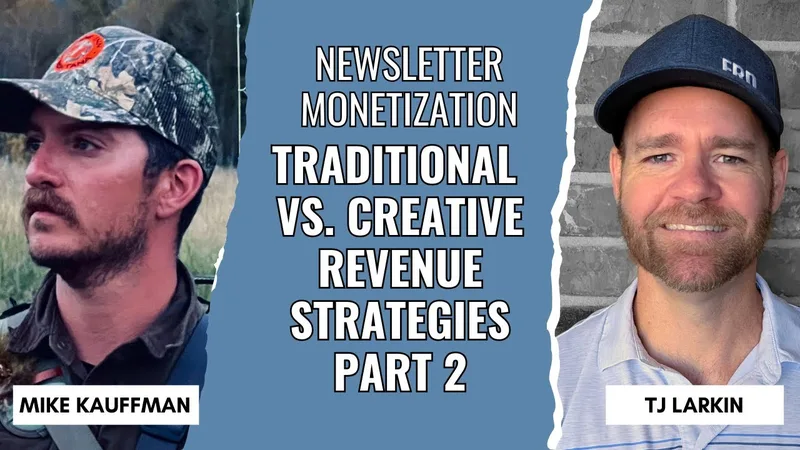
- Ask your readers before you build. Michael floated every product to his community first, from a discount card to a happy hour to a Monopoly board. If they voted no, he dropped it.
- Small lists can make real money. A discount card, shirts and a ticketed happy hour brought in about $1,300 when he had roughly a thousand subscribers.
- He said no to about $10,000 in sponsor money. Local businesses wanted spots on the Monopoly board. He refused so the board stayed good, and it sold out in 15 to 16 days.
- Newsletter Ventures is his next move. It has four pieces: a monetization agency, a micro fund, the Newsletter Club community and invite-only collectives.
Michael Kauffman does not run his newsletter like most people do. He barely sells ads. Instead he asks his readers what they want, builds it, and sells it to them. This is part 2 of our conversation, so if you want his story from the start, read part 1. Here he gets into the products, why he said no to sponsor money, and the company he is building for other newsletter operators.
Two ways to make money from a newsletter
Michael splits it into two buckets. The first is what he calls traditional: ads, sponsors and affiliate links. He has done the big banner at the top with four logos, signed up for a month or two at a time. He has also done the Amazon affiliate link that earns a small cut.
He calls it an uphill battle. It means a lot of cold outreach, a system built to scale, and more send days to squeeze out more revenue. His take: "I'm not here to sling ads." So he went to the second bucket, which is making and selling things his readers actually want.
The crew card was a marketing play first
His first product was a discount card, the crew card. It listed 10 local businesses, each with a one-off 10% discount. He did not start it to make money. He had a small list and no Meta ads running, and he wanted to ride the coattails of other businesses. If he made those businesses look good, they would share him with their own audiences.
It worked. The cards sold like wildfire, and he let his community set the price and vote on whether they wanted the card at all. That vote is why he felt safe building it. As he put it, if they had said no, they would have taken the idea out back and killed it.
With about a thousand subscribers, the card made a couple of grand. Meanwhile he was making a couple hundred bucks per ad with under a thousand subscribers, and giving away ads to look bigger.
The happy hour: $20 tickets, 40 sold
Next he asked readers if they wanted to meet up for a happy hour. The vote came back strong, so he sat down with the general manager of a local business, a guy named Chuck, and said he had no idea if anyone would show.
They ticketed it at $20, Michael kept the ticket money, and he promoted it for three weeks. About 40 tickets sold and the event sold out. Counting shirts, discount cards and tickets, he thinks he made around $1,300 on a list of maybe a thousand people. It was also a big win for the host business.
The Monopoly board
The idea came on a fly fishing trip to New Mexico with his girlfriend. The Airbnb had a local Monopoly board, and when he opened it, it was businesses everywhere and complete garbage. He figured he could do it better.
He took it to his community: an outdoor, nature-focused, evergreen board rooted in the Catskills, with reservoirs, rivers, towns and mountaintops. The vote came through the roof. He built it, and it sold out in 15 to 16 days. A new batch had just finished and was shipping when we recorded.
The bigger win was wholesale. Because his subscribers are business owners, he opened wholesale accounts and sold to them as well as to readers. Michael says those boards had the highest sales velocity of any product the local businesses carried, and it blew him away. The back of the box said Catskill Crew, so people who were not subscribers took the brand home. He calls the discount card "inbox to wallet" and the board "inbox to home."
Why he turned down about $10,000
Plenty of local businesses wanted a spot on the board. Michael says he turned down probably $10,000 and paid for the first run himself. He did not want to take that money and then have 500 buyers open a box of garbage.
To reduce the risk, he opened a presale waitlist with 24 hour early access, and about 750 people signed up. He said he did not expect to be living out of the post office, and that they broke a record there for volume.
TJ made the point that short-term money would have hurt the long-term business. Michael agreed and gave an example. If TJ's Auto Parts had bought Boardwalk and then gone out of business, he would have had to redesign the whole board, and nobody would have cared about an auto parts shop anyway. He is blunt about it: if you think this model will make you money quickly, it is not a good business model for that.
I have no issue failing. I have no issue falling on my face. Doesn't feel good, but when you're gentle with yourself and your community and go, hey, what do you guys think about this, should we try this, it removes a lot of the pressure on yourself and you don't feel as salesy.
Failing small, then trying again
He has plenty of misses. He worked with a sponsor that was a headache and looked terrible. When he tried to move a pile of discount cards, he emailed that supply was running low and got a bunch of unsubscribes. He says he does not blame people and will never do it again.
His fix is to bring everything back to his community. He asked what they thought of a puzzle, and has samples of a Catskill Crew puzzle he says he designed badly because it is all black. He tried a snack line with a co-manufacturer and thinks he will pass because the margins are not there. He is also looking at commercial real estate, with one building already in hand, and wants to own both the property and the operating company.
- 011. Ask your subscribers. Say "I don't know, what does everyone think?" and mean it.
- 022. Let them vote, and let them price it.
- 033. Start with samples or a waitlist, not a big order.
- 044. Skip the sponsor money if it makes the product worse.
- 055. If it flops, drop it and try the next thing.
What Newsletter Ventures is
Michael describes it as stars and constellations, with several pieces forming something bigger. There are four of them, plus tools.
- The agency. It focuses purely on monetization. It does not touch content or growth. It is selective, works outside local newsletters too, and reverse engineers the operator, content, audience and market to find sponsorships, products and premium models. They use the same approach he used at Catskill Crew: community driven, derisked, validated.
- The micro fund. The plan is to invest in operators they love. They would work with a newsletter through the agency for a couple of months first, then make a capital injection for shared upside. There are already a couple of checks waiting to be written, but there is no rush.
- The Newsletter Club and collectives. The Club is now part of Newsletter Ventures and anyone can join. Collectives are more selective, themed groups such as sports, local or science, with access to advertisers, sponsors, manufacturing resources and likely an in-person element.
He is also working with developers on tools for monetization. His partner Joe is a strong advertising and marketing mind, and the two of them are approaching monetization from creative and traditional angles together.
Why start it? Michael says content and growth are straightforward. Monetization is where operators get stuck. He has seen newsletters with 100,000 subscribers making about $100 a month, and he talks to science newsletters with 50,000 subscribers making around $1,000 a month. He was making $1,200 a month with a thousand subscribers in the middle of the woods.
Collectives, and a network of local operators
TJ asked about a case close to our world. If 20 local operators each had 10,000 subscribers and worked together, that is 200,000 people, which is more interesting to bigger advertisers. Michael said yes, 100%.
His pitch is that a buyer can reach a network of independently owned and operated local media companies, and these are serious operators with a solid voice, validated in their markets. He compares it to the creator economy, where brands first chased the biggest followings and are now moving toward quality and authentic voices.
AI summaries and why community holds up
TJ asked about the recent essays on the risk AI and Gmail summaries pose to newsletters. Michael had not read them, but thinks both sides can be true. AI is coming for this space, and barriers to entry are low. If you are just upcycling news, a summary will do the job. If you have your own takes and readers who want to read the thing, a summary does not replace you.
His answer for any market is community. He lives in the middle of the woods, so he leans into history, nature and neighbors. He points to Connor, a Newsletter Club member in New York City who focuses on Broadway and Off Broadway. For Michael, community is the magnet, and in a world of AI it matters more.
Questions people ask
What is Catskill Crew?
How did the crew card work?
Why did he turn down sponsor money for the Monopoly board?
What is Newsletter Ventures?
TJ is the founder of Local Media HQ. Every week he talks with local media operators about what is actually working in their towns.