
How Salina 311 Hit $500k in a Town of 60,000
Matt Moody's Salina 311 reaches 30,000+ members in a town of 60,000 and expects north of $500,000 this year. Mostly automated, no ad spend, and paid for by readers, one daily ad and a legal-notice contract.
 TJ LarkinHost, Local Media HQ PodcastDecember 17, 2025 · 8 min read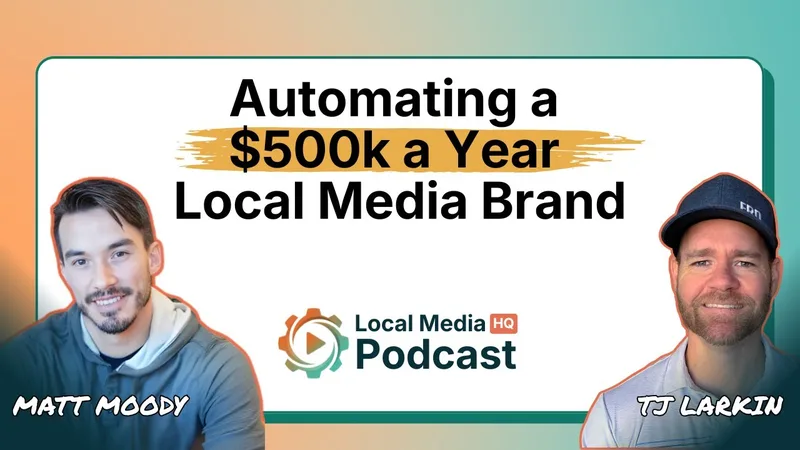
- He never called it a newsletter. Matt calls Salina 311 a community dashboard: data first, then stories, then rewards. Calling it media, he says, gets you pigeonholed.
- Photographers grew the list, with no ad spend. Stories on the Facebook page sat behind an email signup, and event photo galleries did the rest. Those galleries are now part of the paid tier.
- Readers pay the most. Individual memberships are the largest chunk of revenue at $25 a year or $20 a month. One ad a day, a legal-notice contract and paid events add to it.
- Crime and free obituaries are not a risk. Crime is by far the most-read content, and free obituaries are a matter of respect for the community.
Matt Moody runs Salina 311 in Salina, Kansas, and he doesn't think of it as a local newsletter. He started in 2021 trying to automate one, and over time it became what he calls a community intelligence platform. We recorded this episode in December 2025, when he told us Salina 311 would do north of $500,000 in revenue for the year.
Why he never calls it media
Matt gives credit to a tweet from Balaji about community dashboards. He took the idea and applied it to Salina. He avoids the word media on purpose, because you get pigeonholed and, in his view, most people don't trust the media.
The fix is to start with numbers. Salina 311 tracks data first. That data can be shown as a chart or as a story, and most readers engage more with the story. It keeps the coverage objective: the site isn't saying something is good or bad, only what it is.
Points for adopting a shelter pet
The next step in that tweet was an incentive structure to move the numbers in a better direction. Matt's example is the animal shelter. Salina 311 tracks how many pets are there and how many get adopted, and now creates a reward for adopting a pet.
Members earn points and redeem them for gift cards or experiences at local businesses. Matt says it's still early, but it looks good and is working correctly so far.
SMS, topic alerts and a Twilio surprise
Matt sees email as one distribution channel, not the whole business, so he added SMS. The daily email is a summary with a snippet of every story from the last 24 hours. Text messages are story notifications, and members toggle on the topics they want by email or SMS.
Public meetings are a good example. The city and county commission meetings are automated: transcribed as they happen and turned into stories. When a long court fight over a famous burger shop's mural ended with the city losing, subscribers heard by text and email right away. Then he looked at his Twilio bill and wondered what in the world was going on, because the texts had added up. He says it isn't crazy yet, though picture messages are coming.
How he grew with no ad spend
Matt did not use Meta ads. His one growth purchase was a Facebook page: he paid $1,000 for an automated police scanner page for Salina, which had around 20,000 followers. It gave him early information for his crime coverage.
On their own page, the trick was simple. Links posted automatically, but to read the story you had to give your email. The other trick was people. He hired photographers to shoot events and sports, then published the photo galleries. If you might be in a photo, handing over an email is not much of an ask. That, he says, is the one part that isn't automated, and it's still the biggest draw.
Paid memberships and sponsored galleries
The largest chunk of revenue is individuals who pay: $25 for the year or $20 a month. Matt is amazed how many people pick the monthly price.
The photo galleries moved behind the paywall. If a business sponsors an event or a team, its galleries only need an email. Without a sponsor, the galleries are paid. That drives revenue both ways: families and kids buy for the photo of the touchdown, and a business that cares about a team will sponsor so every fan sees it free.
Matt says local sports isn't a huge driver of signups. For advertisers, though, it is a positive, goodwill place to put a brand. He is also working on automating sports coverage, since games are often streamed.
The events platform
Salina 311 scrapes event calendars, and anyone can add their own event. People can pay to feature one, add an image or boost it by the day. Organizers can also pay to give members points for showing up, like points to the first 100 people. A farmers market did this recently.
Matt says it brought in about $10,000 since rolling out in July, and he has long thought it could become one of the bigger channels. The platform itself started life as an events calendar before turning into Fractals Network, after the Ghost site no longer gave him the control he wanted.
Crime stays in, and obituaries are free
Most local operators in our space avoid crime. Matt covers it because he already had the connections to automate it. Some brands may not want to appear next to crime stories if you sell only advertising, but he says it hasn't hurt Salina 311 much, partly because he balances it and a smaller town has little crime. It is by far the most-read content.
His view is simple: if you call yourself a community hub, it's part of what happens. Every automation prompt tells the AI not to add any comment on whether something is good or bad.
Obituaries follow the same thought. Newspapers charged families to publish one, which Matt thought was dirty. Salina 311 publishes them free, including in print. The three funeral homes in town send them in, and the print pages cost real money.
I look at it as a sign of respect for community members. It's really gross that somebody wanted to charge them to do this.
How they became the paper of record
Salina's old paper had been bought by a conglomerate and had no staff left in town. Kansas law required legal notices to appear in a paper of record, and Matt thought they could print what they were already doing. Salina 311 prints in the county. The paper didn't.
That triggered a review, and the county opened it to bids. Matt says they lowballed it and won. The biggest piece is the delinquent property tax list, which runs about 20 pages in their format. The county used to pay the old paper about a quarter of a million dollars a year, and Matt wishes their pricing were the same. Printing the extra pages costs money, but it has worked really well for them.
- 01Start with the biggest local names
His co-founder visited the largest businesses at low prices, and a big name lends credibility to the next advertiser.
- 02Make buying easy
Self-serve ad buying on the platform handles most of it now. Annual deals sometimes need a call.
- 03Send analytics automatically
An email goes out 24 hours after the ad runs with views and engagement.
- 04Raise the price until someone pushes back
Matt says sellouts are his sign to keep going.
One ad a day, and a $400 price
Salina 311 runs one big ad in the daily newsletter. When they started, that spot cost $100. In 2026 it goes to $400, and it has gone up every year. Matt cites a roughly 50% open rate every morning. Almost all the advertisers are bigger names: dealerships, medical providers, banks, insurance, event venues and some home construction. He has almost no mom and pop businesses.
At the last renewal he lost a little, but not enough to leave a waiting list. Once he sees real churn he'll hold the price and add another spot. Most of the sales are now inbound.
Taking it to other towns
Fractals Network is how Matt plans to repeat this. He doesn't expect to launch in a big metro. His view is to chop a metro into smaller communities and then aggregate them in one place for people who want all of it. Inside the Fractals dashboard, members can toggle on a neighboring community.
A new community recently came on in Wilmington, North Carolina, and the owner chose communitydashboard.org as the domain, which Matt likes. Matt himself lives in a town of 5,000 that he would love to cover eventually, but he'd have to automate every last piece to make the money work.
Questions people ask
What is Salina 311?
How does Salina 311 make money?
Why call it a community platform instead of a newsletter?
How did Salina 311 grow without ads?
TJ is the founder of Local Media HQ. Every week he talks with local media operators about what is actually working in their towns.