
How Wichita Life Sells Ads, a Job Board and Events
Landon Huslig sends Wichita Life four times a week to almost 30,000 people. He explains his three ad slots, a Google Sheet calendar, a $229 job board and the events that build the brand.
 TJ LarkinHost, Local Media HQ PodcastMay 19, 2025 · 9 min read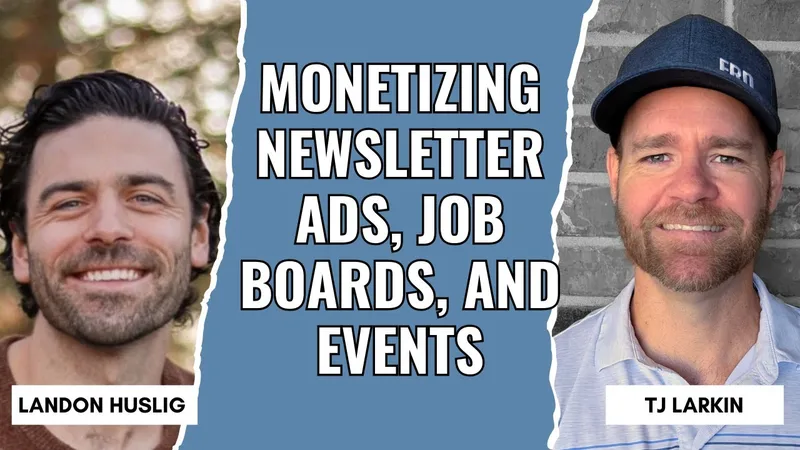
- Three ad slots, one Google Sheet. Primary, secondary and baseline ads, tracked in a simple calendar. He fills the whole year for recurring sponsors so he never oversells a date.
- Four sends a week means four ad slots a week. He went from one email to four because long issues got clipped by Gmail and because he needed more places to sell. That is about 16 primary slots a month.
- The job board is easy extra money. Niceboard costs him $229 a month, it took 10 minutes to set up, and he has netted a few thousand dollars over the last year.
- Events are brand first, profit second. His anniversary party roughly breaks even, and he still sees it as marketing. He is undecided on charging for the next ones.
Landon Huslig is back on the show to talk about the money side of Wichita Life. He covers how he sells and tracks ads, why a job board has been worth it, and how events help the brand without making much profit. It is a practical conversation, with real prices and some honest "I wish I had a better system" moments.
If you want his background first, start with his first interview on the show. This one picks up from there.
Three ad slots: primary, secondary, baseline
Landon sells three kinds of ads. The primary ad is the one you always see: his logo sits at the very top next to the sponsor's logo, and the ad itself is a couple of paragraphs, roughly 50 to 100 words, with links and an image. He uses a lot of GIFs and rotating images.
The secondary ad is the same format further down the email. The baseline ad sits near the bottom, before his events: one to three sentences, no image, but it still gets a link. He does not sell many of those. He calls them gravy, and says one furniture company paid a few hundred dollars for a baseline spot that took almost no work.
The logo at the top is clickable and gets a handful of clicks, probably some by accident. But it is really a brand awareness play. Primary costs maybe 25 percent more than secondary, though he says every deal is different.
Why four sends a week
Landon started with one email. As he kept covering local news as well as events, it got bloated, and anything over about 1,400 to 1,500 words risked being clipped by Gmail, which hurts deliverability. Splitting it into two shorter sends fixed that.
Then he kept adding sends because he needed more ad slots, first three a week, then four. He does not sell out every primary slot, but he sells most of them. If a primary is open and he has a secondary sponsor, he moves that sponsor up for free. He also has two or three secondary sponsors he can slot in, and he can drop his own job board into an open spot.
He keeps one or two free ad slots open each month on purpose. Bigger companies run approvals that move slowly, so a spare slot lets him swap people around when a sponsor is not ready by Wednesday.
A Google Sheet runs the whole calendar
Landon tracks every ad in a Google Sheet. One column is the date, then columns for primary, secondary and his other slots. A lot of his deals are two primary emails a month, so for the City of Wichita he types the sponsor into the right dates and fills out the full year.
Some deals, like the city, have run for a couple of years. There are always about 15 conversations in progress that have not committed, and the sheet keeps him from promising a primary spot he does not have.
I wish I had a great system. I mean, I have a decent system, I don't miss the ad slot, but I just have a Google Sheet.
He has looked at Sponsy, which sends the sponsor an approval link for the copy and image and plugs the approved ad into your email platform. Looking at the pricing live, it was $109 a month for up to 15 ads, plus $7 for each extra one. He has not switched, partly because his ads are already running over months of email threads, and partly because he pitches two newsletters in the same area as a combo, which Beehiiv's own ad tool does not recognize.
He writes a lot of the ad copy himself, usually in his own voice, after asking what the sponsor wants included. Some companies need everyone to approve it, so he takes a first stab and sends it over.
Handshake deals and the home of the week
Landon says he should use more contracts. His bigger deals have them, but many are handshake agreements over email, and a sponsor could cancel tomorrow. He tries to sign people for as long as possible, with a year and then a re-up conversation, and he nudges the price up at renewal. A home cleaning company runs August through December every year, which he can now plan around.
His home of the week is the example. A local real estate company paid a low four-figure monthly fee to feature one home on social four times (he has about 50,000 Instagram followers) and in the newsletter four times. Last week the company sold its residential division and the deal ended. Landon already has a list of 12 to 15 individuals and brokerages who reached out, and he plans to roughly double the price.
For people who forget follow-ups, he sets calendar reminders. If a sponsor says "come back in two months," he books it.
A job board that costs $229 a month
Landon has run a job board on Niceboard for about a year. It costs him $229 a month, though he says it was cheaper when he signed up. There are cheaper tools, and he has seen some at $100 one time, but it took about 10 minutes to set up.
A regular listing is $99. Selling one featured listing or two regular ones covers the monthly bill. A featured job also gets a mention in the newsletter or on social, and a star on the board itself. The board lives at jobs.wichitalifeict.com, but his real traction comes from mentioning it in the email.
He seeds the board with five to ten jobs so it never looks empty, then promotes it. The day he mentioned it in a secondary ad, one person paid for a spot. When he gets lazy and stops promoting it, sign-ups slow down. Adding a job takes him about five minutes: he finds a listing online, pastes the link, and Niceboard fills in most of it. In social posts he tags the business and uses a Canva template. Over the last year he has netted a few thousand dollars, and the analytics show views and applications.
- 01Seed it
Put five to ten jobs up so it does not look empty.
- 02Promote it in the email
The newsletter is where the sign-ups come from.
- 03Sell featured spots
A mention in the newsletter or on social plus a star on the board.
- 04Keep it low maintenance
Add jobs from links in about five minutes each.
Events: marketing first, profit second
The anniversary party happens every April. This year was the fourth. It does not make much money, sometimes a little, sometimes it breaks even. This year they made Wichita Life hats and gave out 110 of them to influential people around town, which he counts as marketing.
He also co-hosted a one-time event with Audra, who runs a women's leadership collective in Wichita and Kansas City. It was called This Is Her, a TED-style night with six women speaking for seven or eight minutes each, with networking breaks. It sold out in about an hour, mostly because of her network. Everyone made a little money, and the networking was the real win. She got too busy to run it a second year.
Next he is thinking about a dating event, since Wichita was voted the second-worst dating city in the US. A comedy club event called Pitch a Friend already exists, run by someone else. His readers also voted in a poll, and they overwhelmingly wanted a 20s and 30s meetup, likely at a brewery. First, he is helping with Riverfest.
Should events be free?
Landon is not sure. A $20 meetup is tempting, and so is the idea of making $500 on an event, but he asks whether it is worth the effort. He also worries about the Tim Ferriss idea that events should be free or very expensive.
We say start free if you are small. The tradeoff he kept returning to is that free events can bring people who are not invested, and he would like people to have some skin in the game.
Taco Fest and the best taco
A friend of his runs many of the biggest events in Wichita. Taco Fest draws somewhere between 3,000 and 10,000 people depending on the year. Landon sponsors and promotes it, sometimes with cash and often just by helping. He also sponsors the best taco award, so the winner's plaque reads "sponsored by Wichita Life" and hangs in the restaurant.
One small tip on image size
Near the end, Landon shares a trick. When an issue gets close to the Beehiiv clipping limit, he downloads the biggest images, converts 2.5 MB PNGs to JPEGs at about 0.7 quality, and re-uploads. He also uses five to seven images or GIFs in a rotation for real estate features.
Questions people ask
How does Landon sell newsletter ads?
Why does he send four times a week?
What does his job board cost and earn?
Does Landon charge for events?
TJ is the founder of Local Media HQ. Every week he talks with local media operators about what is actually working in their towns.