
A 31-Year Retail Broker Built a 10,000-Reader Newsletter by Being the Face of It
Jimmy Farrell took CHS Happenings in Charleston from zero to 10,000 subscribers. He explains why the brand is him, why Instagram beats LinkedIn for readers, and how he plans to pay for growth.
 TJ LarkinHost, Local Media HQ PodcastOctober 30, 2025 · 8 min read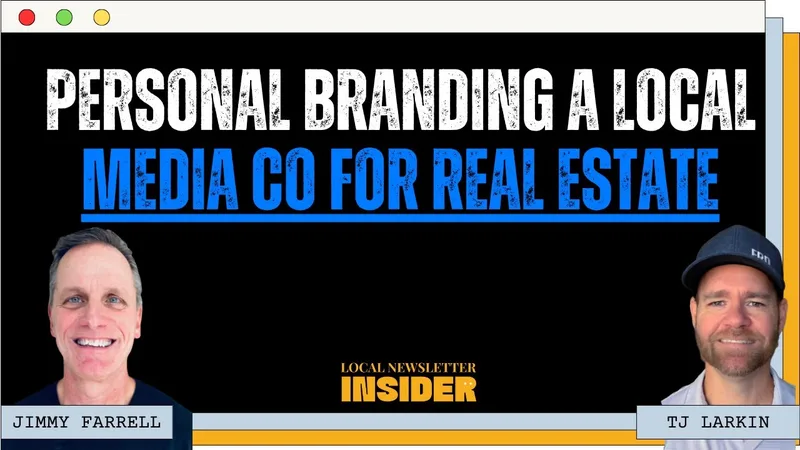
- The brand is a real person. Jimmy chose to make CHS Happenings about himself instead of hiding behind a "we." Readers know he is out in the community every week.
- Old expertise became the scoop. Thirty-one years leasing retail space gave him broker sources, and he beat the local paper on where Charleston's second Trader Joe's would go.
- Instagram is the growth channel. He says LinkedIn is not where local readers or small sponsors hang out, so he is putting his time into short interviews with local owners.
- Sponsors come before more spending. He paused heavy Meta ads at 10,000 subscribers and wants sponsorship money to fund the next round of paid growth.
Jimmy Farrell publishes CHS Happenings in Charleston, South Carolina, and he did it while still running a real estate business. He passed 10,000 subscribers about three weeks before we recorded. We talked about why he put his own name on the brand, where he spends his social media time, and what he plans to fix next.
From retail brokerage to a newsletter
Jimmy grew up outside Washington, DC. For 31 years he was a commercial real estate broker across DC, Maryland and Virginia, the person you called if you wanted to lease a storefront for a restaurant or a yoga studio. He says that gave him a real appreciation for owners who put their own money and sweat into a business.
He and his wife Kim had vacationed in Charleston for years, and they moved there in May 2019. Leasing retail there is, in his words, a young man's game, so he took some time off and then started selling homes with Kim. He began writing rough blog posts about local businesses on his real estate site. Then he took a newsletter course in March 2024 and sent his first issue of CHS Happenings that June.
Zero to 10,000, and why he eased off the gas
Jimmy grew organically from June 2024 until February, ending up at about 875 subscribers. Then he put money behind Meta ads and passed 10,000 a few weeks before we spoke.
Real estate had already taught him to run ads under tight rules. Real estate advertisers have to use a special ad category, so you can't target by age or race, and he learned to aim through interests and to sharpen his copy and images.
At 10,000 he dialed the ads back. His reasoning: he built the newsletter to raise his profile for his real estate business, and it did that. Now he wants sponsorship revenue before he spends heavily again. TJ agreed, since an advertiser will not pay more for 12,000 than for 10,000, so more growth does not help until revenue catches up.
The brand is Jimmy
Early on Jimmy decided not to write as "the royal we."
I want to build a connection and I want people to know that there's a real deal human being behind this brand.
He is a regular at his favorite local shops, and his line to readers is that he will walk past 10 Starbucks to reach the best local coffee shop. TJ's point on this: as AI writes more, the thing that separates you is proof that you are actually there. It does not have to be the founder, either. One of TJ's partners pays someone full-time to be the face of the newsletter.
His old job also gives him an edge no one else has. Years of working with Charleston's retail brokers means they share scoop with him when their client is fine with it. He beat the local paper on where the second Trader Joe's would open.
Instagram, short interviews and what to hand off
Jimmy says LinkedIn is the go-to platform in commercial real estate, but not where local readers or small sponsors spend time. So he focuses on Instagram. His Instagram was flat for a long time, because all he posted were calls to action for the newsletter.
Now he films short interviews with local owners. He shoots footage of a coffee shop, sits down with the owner for about 20 minutes to get the origin story, and cuts it into short form. He reached out to the owner of a new bookshop, Ladybird Books on King Street, on Instagram, and it helped that he already knew the PR firm handling its opening.
TJ's advice here: don't assume people know what you wrote about. When his Instagram person made a video about a sports store that had been under construction for a year, it still got a lot of engagement. Make the video monthly until it opens, then three after.
Jimmy is a solo operator, and he is wondering what to hand off. Social media is on the list. Outreach to sponsors is not, because after years of long retail deals he has his own follow-up system and is leaning toward keeping it.
How he plans to find sponsors
Two routes came up. TJ has been running Meta ads aimed at advertisers, which bring in a lot of small leads. One of his newsletter partners, a college student with a 1,500-subscriber newsletter, sold five ads from them in under two months at around $200 each, mostly because he kept calling.
The catch is that these leads are tiny, often side hustles. For higher-value categories like dentists, med spas and banks, TJ described a simple setup: pull business emails with Outscraper and run cold email through Smartlead. His second idea is a direct approach, with Instagram and LinkedIn DMs and comments to the business owner. Either way, the first touch can be automated, and the moment someone replies, a human takes over.
- 01Collect the leads
Meta ads for advertisers, or a scraped list of dentists, med spas, banks and similar
- 02Automate the first message
A short sequence in a tool like GoHighLevel, with a second email two days later
- 03Go human on a reply
The second someone responds, you or a partner takes over personally
- 04Meet owners in person
Chamber events, with a simple offer of two ads a month plus Instagram for around $250
On LinkedIn, TJ's point is that the regional players are there: bank marketing teams, agencies, power company executives. That is where $1,000 or $2,000 a month partnerships come from.
A paywall, a poll and the open rate
Jimmy's open rate was holding at 71 to 72%, but his click-through rate was dropping. He suspected that most of his links went to the Post and Courier, which has a paywall in front of nearly every article, and readers had learned that clicking leads nowhere. He polled his readers and 72% did not subscribe. So he started writing short summaries of the articles on his own site and linking there instead. It was too early to see the trend when we spoke.
Once a week is enough for now
Jimmy sends the newsletter on Fridays at 7 a.m. Midweek he publishes web-only live music lists, on Monday for the work week and Thursday for the weekend. He asked whether he needs to go to twice a week for sponsors.
TJ's answer: unless you have sold out your ad slots, put that energy into Instagram. Add a second send when a ninth advertiser wants a spot and you have only eight. A newsletter is private, while Instagram is public, so a stronger Instagram helps advertisers find you.
They finished on ManyChat, an Instagram DM tool. Jimmy had set it up days earlier so new followers get a DM inviting them to subscribe.
Questions people ask
Who is Jimmy Farrell?
How big is CHS Happenings?
Why did Jimmy stop spending on Meta ads?
Should a local newsletter publish twice a week?
TJ is the founder of Local Media HQ. Every week he talks with local media operators about what is actually working in their towns.