
A PE Teacher, 25,000 Subscribers and a Six-Figure Local Newsletter
Andrew Smith runs Huntsville Explorer on the side of a full-time teaching job. He walks through cheap Facebook likes, feature-first sales and his first big event.
 TJ LarkinHost, Local Media HQ PodcastJuly 13, 2026 · 8 min read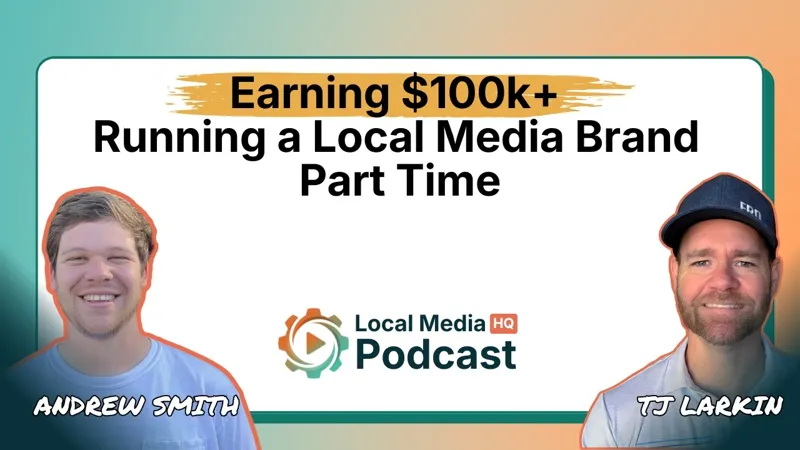
- No secret formula. Andrew says he has no special relationships or insights. He finds advertisers, reaches out to two or three a day when things are slow, and gets them on a call.
- Feature first, pitch later. He works a brand into the newsletter, tells them he featured them, then circles back three or four months later when he has an opening.
- Cheap Facebook likes made him look big. Page-Like ads cost maybe 3 to 5 cents a like and built a Facebook page of about 50,000, which helps when he talks to advertisers.
- Events are his big swing. The Huntsville Food Fest has 30 restaurants and about 545 of roughly 600 tickets sold at $50. He expects $15,000 to $17,000 in profit.
Andrew Smith teaches PE at a school in Huntsville, Alabama, and runs Huntsville Explorer on the side. He says it brought in about $55,000 through June and he hopes to pass $100,000 by the end of the year. We recorded this a few weeks before his first big event, so he walked us through his sales routine, his social setup and how he decided to take a $12,000 swing on a food festival.
He picked one city and stayed
Andrew started a Facebook page around December 2023 with a plan for a statewide blog network covering Huntsville, Birmingham and Montgomery. Then he heard Ryan at Naptown Scoop explain how valuable a local, centralized audience is. He dropped the statewide idea and focused on Huntsville and a newsletter in about June 2024.
He says it was worth it, partly because it is more fun to write about a city you already care about. TJ opened the episode by pointing out that Andrew has no special skills or connections here. Asked about his sales method, Andrew agreed: it's pretty much just a grind, with no secret formula.
Cheap Facebook likes, and what they are for
Most of the newsletter list came from Facebook ads. The Facebook page grew another way. Andrew ran Page-Like ads, an engagement ad where the goal is page likes, and he remembers it costing maybe 3 to 5 cents per like. He ran them in 2024 and turned them off at around 15,000 to 20,000 likes.
He doesn't pretend the likes are the product. They are a number he can add to his newsletter and Instagram when he tells an advertiser he reaches 25,000 locals. He also says the page is a good way to find out whether you enjoy making social content before you go all in.
Instagram is where he puts his energy now, and he says it grows about 1,000 followers a month. Facebook is second fiddle. He also lost his Facebook creator monetization after a random flag, and Facebook support couldn't restore it. His lesson is not to count on that income.
Feature first, pitch later
Andrew learned that selling a $500 to $700 a month package to a brand that has never heard of you is hard. So when he wants a brand as a client, he finds a natural way to feature them in the newsletter. Then he sends a short note with no ask, and circles back later.
I don't ask for anything, but just let them know who I am and that I naturally featured them. And then in like three or four months when they have an opportunity or I have a good opening, then I'll circle back with them.
Cold outreach is fine while you sell $100 to $250 slots, he says. Once packages hit $500 to $700, brands that know you are far easier to sell. He also says most of the people he contacts already know the brand from social, and a prospect who follows him on Instagram makes the first message much easier.
Where he finds prospects
His prospect list is mostly things he sees around town. While driving, he hands his phone to his wife and has her write down the billboard advertisers in his notes app. He also flips through local magazines and writes down their sponsors.
TJ noted that main-road billboards cost at least $750 a month, and Andrew said he was once quoted $1,600 for one. Anyone paying that is already spending. As he grows, he spends less time on the smallest businesses and more on the big ones: health systems, large real estate agencies, anyone with a real marketing budget.
How a deal works
Andrew reaches out to two or three prospects a day when things are slow. He uses Instagram DMs, LinkedIn and email, pulling addresses with Apollo or RocketReach. He also has a form in his emails for businesses that want to reach 25,000 people, and it has brought him some bigger clients, including close to $1,000 a month from one.
On the call he asks what local marketing they have done and what success would look like, then pitches back using their answers. Packages run three, six or twelve months, with one sponsorship a month. He sends on Tuesdays and Fridays. Most start at three or six months and he tries to move them to twelve. He says a three-month deal is at least $1,500.
New clients get a puzzle his brand made and a coffee shop gift card, which costs him $10 to $15. After every ad runs he sends the stats. Sales comes in waves, he says, with two or three deals in one week and then nothing for a few weeks.
Two weeks before we recorded, he set up an automation, borrowed from another newsletter operator named Michael, that checks new subscribers against Apollo and sends him the ten best prospects in Slack. He hadn't contacted any of them yet. Apollo costs about $40 or $45 a month, and he wasn't sure he'd keep paying. He still enjoys the sales side and has no plan to hire a salesperson yet.
A $500 social media manager
Andrew doesn't like making social content and doesn't want to be the face of the brand. After he posted a few green screen videos, students at his school started mentioning them. So he stopped.
A woman who works at a local marketing company reached out for side income. He pays her $500 a month. She posts four to six times a week, mostly carousels about upcoming events and markets, plus one or two reels. He is thinking about paying local creators $100 to $200 a month for a video and posting it as a collab, and about asking a local college's marketing department about interns.
The Huntsville Food Fest
Before the Food Fest, Andrew ran two bingo nights at a local bar that each made about $1,000, plus two mahjong classes split with a local company. The Food Fest is bigger. Tickets are $50 for unlimited samples from 30 restaurants at a retail and event space in Huntsville. It happens on August 1, and he expects it to bring in $25,000 to $27,000 against $10,000 to $12,000 in costs.
The restaurants pay nothing. They bring enough bites for 1,000 to 1,200 people and get a post, a place in the room and a way to hand out their marketing. He spent about $1,500 on a professional designer so the event wouldn't look like a Canva poster, and he plans to reuse the branding every year.
The risk was real. He had about 20 restaurants signed and the venue was holding the date, but he announced tickets before putting down the down payment, about $3,600, and the venue wasn't thrilled. He admits that was probably a mistake. His test was simple: would I pay $50 for this? He asked his wife, his parents and some friends, and they all said yes.
- 01Lock restaurants first
He had about 20 signed before he paid for the venue.
- 02Use your own audience
A separate event Instagram account, collab posts and an early bird price of $40 for the first 100 tickets sold out in a week or two.
- 03Add a VIP tier
About 75 VIP tickets let buyers in 30 minutes early and sold out within a month.
- 04Spend a little on ads
About $200 in Facebook ads brought in roughly $3,500 in ticket sales.
- 05Plan year two
He has no sponsors this year, so next year he wants a sponsor deck built from this year's numbers.
Why he isn't expanding
Andrew's plan for 2027 is more of the same. He has six or seven annual sponsors and wants to raise rates and land bigger ones. If he can make $200,000 in Huntsville and keep teaching, he says that is a good life.
He doesn't want to work 80 or 100 hours a week and miss time with his wife and son. If he ever goes full-time or expands, he wants a working playbook first. For now he is trying not to chase shiny objects.
Questions people ask
What is Huntsville Explorer?
How much revenue does it make?
What is a Page-Like ad?
How does he sell sponsorships?
How much does he pay for social media help?
TJ is the founder of Local Media HQ. Every week he talks with local media operators about what is actually working in their towns.