
Why Mount Juliet Buzz isn't chasing $150 ads
Alex Robertson runs Mount Juliet Buzz with a realtor and his wife. He shares how a Facebook group fed the list, why open rates matter less than he thought, and what he'd rather sell than small ads.
 TJ LarkinHost, Local Media HQ PodcastMarch 17, 2025 · 9 min read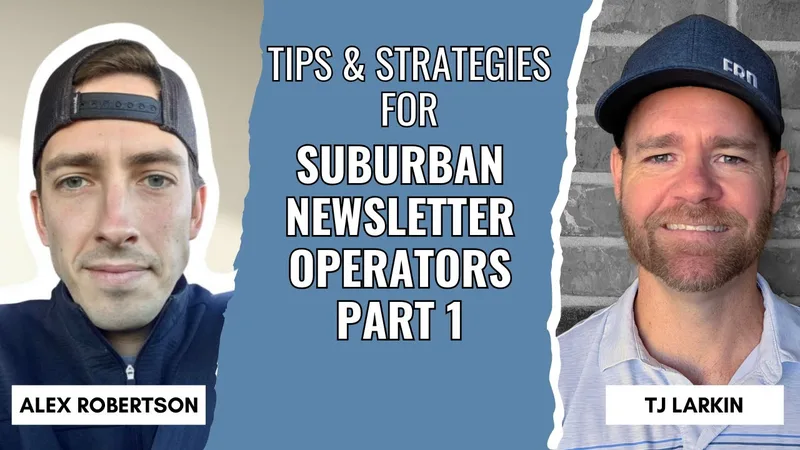
- A Facebook group fed the list. Mount Juliet Buzz partnered with a huge local group that asks new members if they want the newsletter. The yes emails get passed along, and the list sits at 3,410.
- Open rates matter less to local advertisers. Alex watched his open rate slide from about 72% to 65% and worried. Local business owners don't know what a good number is, so the subscriber count carries more weight.
- Small ads are not the game he wants. They make $500 to $800 a month in ads, but chasing $150 from a coffee shop feels like a revolving door. Big advertisers and their own mortgage and real estate leads are the longer play.
- Short video beats a text blurb. For a mortgage broker or realtor, a two to three minute update puts a face on the business, and people hire people they know, like and trust.
Alex Robertson runs Mount Juliet Buzz, a newsletter for a Tennessee town of about 45,000 people just east of Nashville. He started it with a friend who sells real estate and the friend's wife, about a year before we recorded. In this conversation we talk about branding a suburb, the Facebook group that fed his list, and why he doesn't want to spend his time selling $150 ads.
One mortgage business, three owners
Alex has a mortgage business and figured a local newsletter would be a good way to reach people. He pitched the idea to a buddy he'd worked with for a couple of years, a real estate agent, who saw the same potential. Then the agent's wife, Amber, joined in. Her kids were getting older, she had more free time, and the newsletter was a way to get back into the workforce. Alex says she helped them "really take it and run with it."
That makes three owners, and the newsletter has been running since May of the year before we recorded.
Naming a newsletter for a town that sits next to a bigger one
Alex's town is Mount Juliet, but the newsletter also reaches nearby places like Lebanon, a few minutes farther down the interstate. He wondered whether to rebrand, then decided they were too far in. He also worried that Mount Juliet readers might push back if the newsletter started to feel less like theirs.
I told him what I do for my own newsletters in the northern suburbs of Austin. One is named for the middle town, Leander Scoop, with a subtitle that names Cedar Park, Leander and Liberty Hill. Alex could do something similar, or split the newsletter into sections by area. At 45,000 people, my instinct was that covering more ground means more readers and more ad dollars. Alex hasn't decided.
Cleaning the list, and why open rates may not matter
Mount Juliet Buzz has 3,410 subscribers. A couple of weeks before we spoke, they deleted a couple hundred people who hadn't opened in a while, because they'd read that it was a good idea. I suggested a re-engagement email first, so people can click to stay. They had only tried the first, simple version.
Open rates were the worry. They had been hovering around 72%, then dropped to 65%, and Alex had started to stress. We talked it through, and the answer was that the local advertisers they sell to are not sophisticated. They don't know what a good open rate is. A bigger subscriber count holds more weight with them than a slightly higher open rate.
Alex put it simply: the roofer down the road isn't going to care. By the end he said he wouldn't worry about it as much.
The Facebook group that fed the list
Mount Juliet has a huge local Facebook group, and Mount Juliet Buzz became partners with the people who run it. When someone asks to join, a form asks if they want the newsletter with events, activities and news. If they say yes, they enter an email, and those emails get passed to the newsletter.
The catch is the handoff. The group's owner sends the emails in a batch every day or couple of days, and then Alex's team manually types each one into the public subscribe page. That means someone can say yes, and three days later get a welcome email they have already forgotten about. Alex thinks that is why the open rate dropped once the group started feeding the list.
My fix was Zapier, which can send each email from the form into Beehiiv almost instantly. I also mentioned that some people buy Facebook groups from the founders, or are given them, which is technically against Facebook's terms. Alex took the easier, quicker route. I'd also write a different welcome email for the Facebook signups, one that explains how they got on the list.
Why small ads aren't the game
Alex's team makes $500 to $800 a month in ads. They've also proven that advertisers get a return, because they help with a lead magnet. A local gym, for example, can offer ten free stretches to do at home in exchange for an email.
Still, he doesn't want to spend his time chasing $150 from the local coffee shop. He calls it a revolving door, and he's tempted to lean generous, with discounts or free spots. He pointed to Ryan Sneden of Naptown Scoop, who makes a lot of money, with ads as his biggest piece. For Alex it's not clear that ads are what they want long term.
I told him I agree it should be a secondary way of making money. The thing I hear from the people doing this well is to go after the biggest businesses in your area. Alex holds up a magazine called Mount Juliet Lifestyle and says they could pick out the dentists, orthopedic surgeons and universities advertising in it. The pitch writes itself: do you know how many people actually look at your ad? With a newsletter, they know who clicked and who filled out the form, and Alex figures an advertiser could walk away with 30 to 50 emails from a single issue. The same goes for the digital billboard in town. He figures a newsletter spot would probably cost about half as much as the billboard. They just haven't done it yet.
The three of us kind of have a joke, like, this is our retirement. We just don't know how yet.
Not in a hurry
Alex says plainly that they are not trying to replace their jobs with this. They want to be friends with the community first and find the money after that. He admits he doesn't know what the money will be, and I told him that's the right way to think about it, because there are so many ways a local newsletter can pay off over the long run. Having three owners who like each other helps.
Putting a mortgage business in a newsletter
Alex and John own the very bottom section, just above the thank you from Amber, John and Alex. It's called the Mount Juliet real estate update. John writes a short blurb about the housing market, and Alex adds two sentences that link to a landing page for his rate refinance watch list. It hasn't changed since day one, and he says they could do a lot better.
So far Alex has three or four leads from the newsletter and no closings. John got his first real estate lead a month or two before we spoke, and it hasn't closed either. Alex points out that real estate is a long cycle, and a lead takes nurturing. Alex says that means zero monetization so far from their own businesses.
The most popular section is events. They talked about putting a paid business spotlight there, where another business pays for the section. The idea he liked more was video. Two years earlier, before the newsletter, he and John had recorded a two to three minute housing market update on Riverside. In the newsletter, that could sit at the bottom with a YouTube style thumbnail.
Short video puts a face on the business
I love that idea and think it's better than mine. In my newsletter I run a podcast spotlight with a thumbnail that links to YouTube, but that's a 30 to 40 minute interview. For a realtor and a mortgage broker, keep it under five minutes.
The point is not the information, which could fit in three sentences. People hire you because they know, like and trust you, and a short video lets them put a name to a face before you ever get them on the phone. Do it every week, and after three months they have seen you 12 times.
- 01Keep it short
Two to three minutes, under five at most.
- 02Make it fun
People won't watch a 20 or 30 minute update.
- 03Link a thumbnail
Put a YouTube style image at the bottom of the newsletter so it feels like a click, not homework.
- 04Post it on social too
People who aren't on the list may find it.
Questions people ask
Who is Alex Robertson?
How did Mount Juliet Buzz get to 3,410 subscribers?
How much does Mount Juliet Buzz make from ads?
Why did Mount Juliet Buzz's open rate drop?
TJ is the founder of Local Media HQ. Every week he talks with local media operators about what is actually working in their towns.